Tickets now available for Bound Feet Blues full production – Nov/ Dec 2015


I am pleased to announce that tickets are now available for the full production of Bound Feet Blues which will return to the Tristan Bates Theatre in the heart of the West End in Nov/ Dec this year.

The showcase performance last year was sold out two months in advance. For the upcoming full production run, there are only 12 public performances so please do get your tickets soon to avoid missing out again.

What the critics said:

Everything Theatre Everything Theatre, UK

This theatre review site which bills itself as the  “honest and unpretentious guide to the London theatre scene”, gave Bound Feet Blues a 4 star review (out of 5). It described the show as “Engaging, eye-opening, funny and moving” and summed it up in one word: “Excellent” Read Hanna Gilbert’s review: Bound Feet Blues – A Life Told in Shoes, Tristan Bates Theatre. (16 Oct 2014)


The Public Reviews  The Public Reviews, UK

The theatre review online magazine The Public Reviews gave Bound Feet Blues a 4.5 star rating (out of 5 stars) and described the show as “powerful” and “beautifully performed and directed”. Read the review by Nichola Daunton:  “Bound Feet Blues – A Life Told in Shoes – Tristan Bates Theatre” (14 Oct 2014).


BUY TICKETS NOW

Tue 24 Nov – Sat 12 Dec, Tue – Sat at 7.30pm.
Tickets £16 / £12 concessions.
Q&As post-show, 27 Nov & 4 Dec.

Tristan Bates Theatre – 1A Tower St, Covent Garden WC2H 9NP
Box Office 020 7240 6283
boxoffice@tristanbatestheatre.co.uk


See 5,000 pairs of tiny lotus shoes at the Museum of Shoes for Bound Feet – Women’s History Month

The Museum of Shoes for Bound Feet re-opened this year after a fire closed it last year. It would be fascinating to visit it as part of my Bound Feet Blues project but it is in Anren Town of Dayi County, in southwest China’s Sichuan Province.

The press info states:

“In addition to the everyday shoes, the museum also displayed “special-occasion” shoes, which women with bound feet were to wear at wedding ceremonies, birthday parties and funerals as well as rain boots and high-top boots.”


I love the way they have displayed some of the shoes – as in the photo above – as if in a modern Continue reading

Boy or girl? A gender busting clothing line from Selfridges

Selfridges is creating a gender blended clothes shopping space so that you can select clothing that is not gender stereotyped. How cool is that!

This news piques my interest because I’ve always been a tomboy. In Bound Feet Blues,  I talk about wearing boy clothes and boy shoes. One of the themes of the show is gender roles and identity within a cultural expectation of what a woman should be like – and look like in the context of her feet and clothing.

You can check out the Agender section in Selfridges website – or go to the store itself –  to see how their clothes may  or may not complement your personal style.

UEG Para Bellum jersey shorts (Black

From what I can see, the clothing seems generally shapeless and baggy so as to hide all curves or forms that might give an observer a clue to the wearer’s gender.

What that made me realise was that I don’t want to look genderless! Despite still retaining a tomboy sensibility, I love being a woman and I enjoy wearing clothes that express the femininity of my physique. It’s just that I don’t go for the particularly “femmey” look involving flower prints, floaty skirts and girly shoes. I haven’t really analysed my personal style before but I suppose it’s still tomboyish but Continue reading

A Love Story passed down from My Grandma – Women’s History Month

In Bound Feet Blues, the show, I recount the story of how my parents met – as told to us by my mother when we were kids. On stage, I become my mother as we all curl up in bed and she tells the romantic story of meeting the man who would become her husband.

“How we first met” is a genre of the oral storytelling tradition within families – and also among circles of friends. We all want to know where we come from – even, or especially, as young children. We are trying to figure out who we are and what being alive means. Hearing how our parents met gives us the context and if we’re lucky, it tells us we were born from love.

My grandparents (R) met and fell in love. My parents (L) met and fell in love. So here I am (baby in the middle)


In my story performance, I can only tell the one story ie about how my mother met my father. But there are a number of “how we met” stories in my family. The show is only one hour long – which amounts to 25 pages of text. In the book Bound Feet Blues: The Stories behind the Story that I am currently writing, I have more room to tell those other stories as well.

Here is an extract, telling the love story of my grandparents, my mother’s mum and dad:

“It was funny to think of Grandma and Grandpa – well, before they became Grandma and Grandpa. We loved leafing through their photo album and seeing them so young and fresh-faced, Grandpa in those baggy ‘30s style trousers and Grandma in pretty cheongsams and chunky high heels of that time. It was odd to see them in our minds as two young medical students, hanging out with their pals and horsing around in such a scandalous way. It was odd to see a photo of Grandpa playing rugby and running in a race, looking hunky and sweaty, his Brylcreemed hair flying in the wind.

 “I would go and watch him play matches-lah,” Grandma said coyly. “And then he notice me always there and he Continue reading

Bound Foot Warrior – Qiu Jin – Women’s History Month

She had bound feet but she loved riding and martial arts. She wore men’s clothing and was a firebrand orator. Her name was Qiu Jin and was a revolutionary in the early 1900s in  China.

Here is a snapshot of what Qiu Jin achieved, from Wikipedia:

“She was an eloquent orator who spoke out for women’s rights, such as the freedom to marry, freedom of education, and abolishment of the practice of foot binding. In 1906 she founded a radical women’s journal with another female poet, Xu Zihua, called China Women’s News (Zhongguo nü bao), though it published only two issues before it was closed by the authorities.[4] In 1907 she became head of the Datong school in Shaoxing, ostensibly a school for sport teachers, but really intended for the military training of revolutionaries.”

Of her early life, we learn this from Don Tow:

“Qiu Jin was born in 1875 in Fujian Province in China, and grew up in Shaoxing, Zhejiang Province. As a child of a fairly well-off family, she was very well educated, much more than other girls of her time. She was very good in literature and writing, both prose and poetry. Unlike most other girls, she was also very much interested in the outdoor and physical activities, such as riding horses and martial arts. Although her feet were bound[1] starting from about five years old as was the norm at that time for Chinese girls from reasonably well-off families, she was quite good in martial arts and other physical activities, an indication of her determination, commitment, and drive. Later as she grew older and started advocating equality for women, she stopped binding her feet.” See Qiu Jin (秋瑾) – China’s First Feminist | Don Tow’s Website.

As for footbinding and women’s rights, we can read a snippet of her writing here via the On This Deity blog (15 July 1907 The Martyrdom of Qiu Jin):

“We women, who have had our feet bound from early childhood, have suffered untold pain and misery, for which our parents showed no pity. Under this treatment our faces grew pinched and thin, and our muscles and bones were cramped and distorted. The consequence is that our bodies are weak and incapable of vigorous activity, and in everything we do we are obliged to lean on others … Sisters, let us today investigate the causes which have led to this want of spirit and energy among women. May it not be because we insist on binding up our girls’ feet at an early age, speaking of their “three-inch golden lilies” and their “captivating little steps”?

Continue reading

Learn How To Magnify Your Stage Presence to Supercharge Your Public Speaking

Are your nerves letting you down when you have to give a presentation? Is your delivery getting in the way of the othewise powerful message you want to convey to your audience?

If you want to learn the secrets of commanding a full theatre – and have fun, too, along the way – come to the storytelling and perfomance masterclass Own Your Story, Own the Room on Sat 16 May 2015 in Central London.

I’ll be sharing what I learnt from performing my solo show Bound Feet Blues to a sold-out West End theatre so you can take home with you tools to:

# dominate any stage you may be invited to speak on

# welcome and accept the gaze of your audience

# connect warmly with your audience

In Bound Feet Blues, I stand alone on stage for one hour to deliver a dramatised story, playing all the different characters and taking the audience to settings from Oxford, to ancient China and Australia and Malaysia – all without any costumes, props, scenery/ backdrops or music and performed barefoot. The success of the piece depends entirely on me. I must command the stage and hold the attention of the audience for a full 60 minutes. The showcase performance in Oct last year received 4+ Star reviews and one reviewer said of the piece, “a deeply personal and heartfelt performance… I felt the eyes of the audience follow Ooi unblinkingly until the end.”

Do you want to know how you can command the stage like this, too? The masterclass on 16 May could be for you. It will include theatre games that I have devised that will give you experiential learning – one of the best ways to capture performance mastery to magnify your stage presence.

My colleague, Beverley Glick, an award-winning speaker and well-respected journalist, is co-facilitating the masterclass and we will also be guiding participants through how to find the inspiring personal stories in their lives. You will discover how to Continue reading

Bound Feet Blues, the book, to be published by a handsome man at Urbane Publications

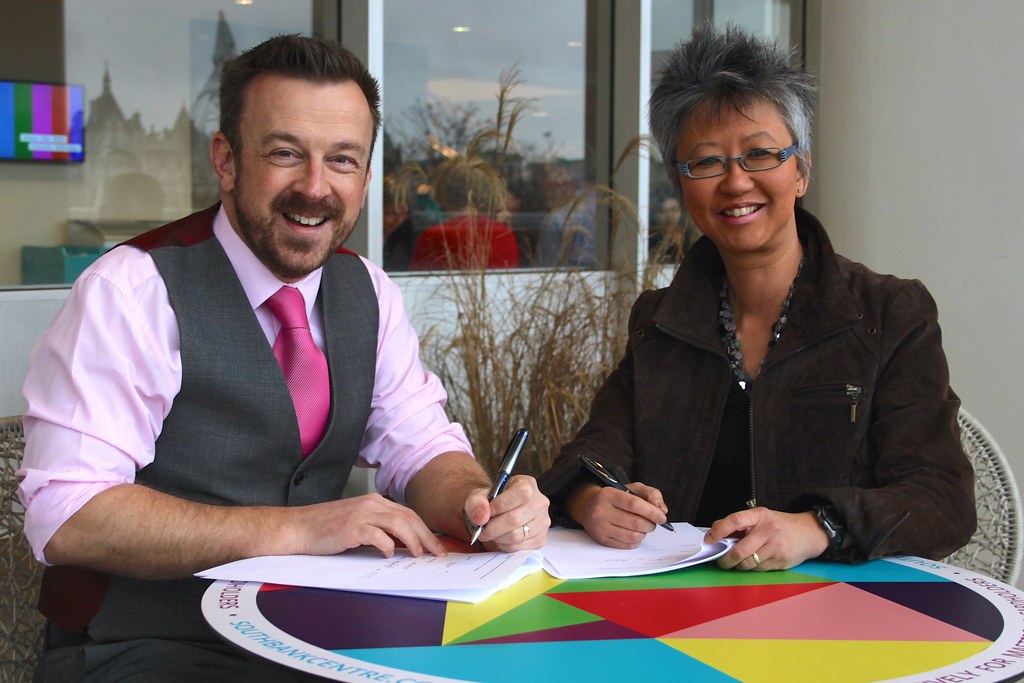
In February, I signed with Urbane Publications to bring out the book of Bound Feet Blues: The Stories behind the Story. Here is the historic moment – I am with Matthew Smith of Urbane, signing the contract on the 5th floor balcony of the Royal Festival Hall.


One of my female friends asked me, “Who is that handsome man you are with?”

Hmm. Regular readers of this blog will know that I grapple with the issue of women being objectified for their beauty and in particular, in ancient China for their tiny bound feet. So as a feminist and a humanist, I am in a quandary. Does that comment objectify Matthew?

Another female friend commented on Facebook about me in this photo: “looking f***ing hot”. Was she objectifying me?

I would say that neither comment is an objectification. I am all for appreciating someone’s looks, whether they are male or female – so long as Continue reading

Women as Decorative Objects – International Women’s Day discussion panel [Women’s History Month]

In ancient China, women were treated as decorative objects – beautiful to look at, unable to leave the house because of their crippled bound feet, silent and submissive. That was the argument I made in my talk for the International Women’s Day panel discussion on Body Image hosted by the Pan Asian Women’s Association (PAWA) last week at the Nehru Centre in London.

L to R: Jee Oh, Yang-May Ooi, Sally Gloyne, Edna Fernandes


And that attitude to women underlies the way that women are viewed and treated today – even in our modern Western society. Of course, great strides have been made in liberal democracies for women’s rights and equality as well as for diversity. But there is still much work to be done in unbinding us from deep rooted cultural traditions that shame us for being “bossy”, old, ugly and dressed unconventionally – ie for being undecorative and for trying to be more than eye candy.

I feel passionately that the past can offer us a way in to exploring current issues in our present culture. We may look at the brutal tradition of bound feet and think that it was a weird practice that has nothing to do with us. But for the women of that time, this practice lasted for a thousand years and was done to little girls by their mothers and grandmothers. They believed that it was the right and only thing to do to guarantee happiness and a good life for their daugthers. If they had that blindspot, what is our cultural blindspot?

Where we are forced to conform to one universal Continue reading

March is Women’s History Month -2015 theme: Weaving the Stories of Women’s Lives

2015 Theme

It is almost as if the theme of this year’s Women’s History Month was designed just for Bound Feet Blues!

March is Women’s History Month and this year’s theme is Weaving the Stories of Women’s Lives. The website of the National Women’s History Project (US) says of this theme:

“Accounts of the lives of individual women are critically important because they reveal exceptionally strong role models who share a more expansive vision of what a woman can do. The stories of women’s lives, and the choices they made, encourage girls and young women to think larger and bolder, and give boys and men a fuller understanding of the female experience. Knowing women’s achievements challenges stereotypes and upends social assumptions about who women are and what women can accomplish today.”

In my show – and the book – Bound Feet Blues, I tell personal stories from the lives of the women in my family and weave those threads with my own coming out journey. But the themes go beyond the stories of one woman and one family to touch on the universal questions of female desirability, identity  and empowerment. In ancient China, women were objectified as decorative objects through their tiny, crippled bound feet. My great-grandmother broke free from tradition to run away from her cruel husband despite her crippled feet. What cultural traditions still bind us to a standard of beauty that denies us our essential powerful identities? How can we break Continue reading

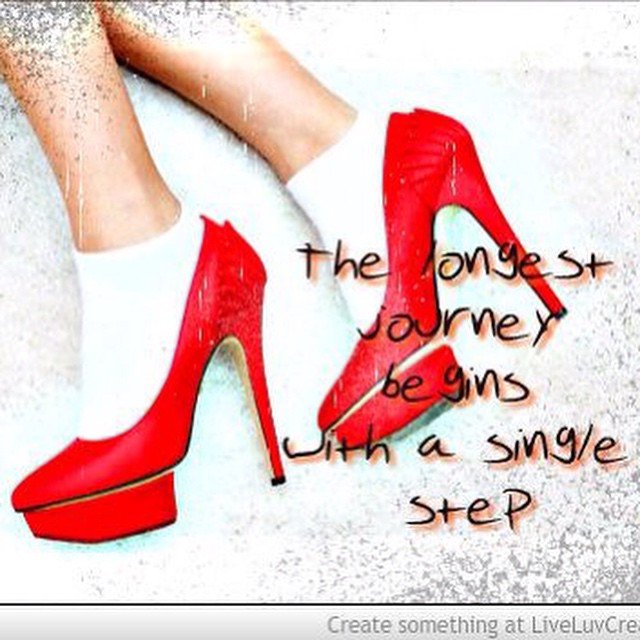
The longest journey begins with a single step

“The longest journey begins with a single step ” – that is the inspiring quote I am using as the opening epigraph for my book of Bound Feet Blues.


It is apt for the topic of bound feet and in particular the pain of walking in bound feet – but also encompasses any endeavour we may try.

Step by step.

That is what got Cheryl Strayed through her thousand mile hike along the Pacific Crest Trail, as portrayed in her book and the movie of the same name, Wild. That is how my great-grandmother escaped an unhappy marriage in China, on her bound feet, to make a new Continue reading