Introducing the landscape of Bound Feet Blues: The Inner Chamber of a Bound Foot Mother

In Bound Feet Blues, writer/ performer Yang-May Ooi takes us to a a diverse range of settings and times – from Oxford in England to the Australian Outback, and also the landscape of ancient China. We are giving you a glimpse into these different places here on this blog over the next few weeks.

In a central scene in Bound Feet Blues, Yang-May demonstrates on stage the gruelling process of footbinding on a little girl.  So, today, we introduce you to the inner chamber of a mother with bound feet where such a process would have most likely taken place.

The home was a woman’s domain in ancient China. Within that was the inner chamber, a private space for the women of the household only. There the women would sew and read and tell stories. And  also probably carry out the ritual of footbinding on the daughters of the family.

Women at home – thanks http://depts.washington.edu/

Woman, Qing Dynasty – thanks to http://www.elegantstory.com/, via Pinterest

Women with bound feet via Pinterest

~~

You can buy tickets for Bound Feet Blues via bit.ly/bfbtickets

DETAILS

Tristan Bates Theatre
1A Tower St, Covent Garden WC2H 9NP

Tue 24 Nov – Sat 12 Dec, Tue – Sat at 7.30pm.
Tickets £16 / £12 concessions.
Q&As post-show, 27 Nov & 4 Dec.


Read Yang-May Ooi’s article on Coming Out as an Act of Personal Empowerment on Zusterschap for National Coming Out Day

The male gaze has controlled how women look and behave for centuries. In ancient China, that view of women as decorative objects led to the brutal practice of footbinding that crippled Chinese women for a thousand years. Today, women in the West are still expected to be pleasing to men in how we dress and act. In celebration of National Coming Out Day, writer/ performer Yang-May Ooi looks at how coming out as lesbian can be a defiance against that objectifying gaze that is as much about personal empowerment  as it is about sexual orientation….

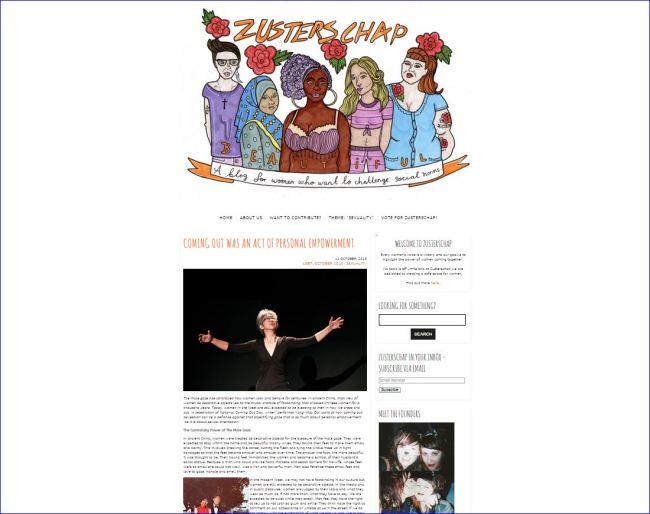
Read the full article on Zusterchap by clicking on the image below:

zusterchap screenshot

Zusterschap is a blog for women who want to challenge social norms:

“Every woman’s voice is a victory and our goal is to highlight the power of women coming together. No topic is off limits and at Zusterschap we are dedicated to creating a safe space for women.

Our goal is to create a supportive community that anybody can support. We want to encourage people into thinking it’s okay to be different and that it’s okay to want to challenge what society tells us. You don’t have to believe what is being sold to you because it’s all made up anyway.”

Zusterschap was founded March 24th, 2015 by Tara Costello and Katherine Hockley.

~~

You can buy tickets for Bound Feet Blues via bit.ly/bfbtickets

DETAILS

Tristan Bates Theatre
1A Tower St, Covent Garden WC2H 9NP

Tue 24 Nov – Sat 12 Dec, Tue – Sat at 7.30pm.
Tickets £16 / £12 concessions.
Q&As post-show, 27 Nov & 4 Dec.

Do our shoes shape who we are? [video] – Yang-May Ooi, writer/ performer of Bound Feet Blues, thinks so

Yang-May Ooi, writer/ performer of Bound Feet Blues – A Life Told in Shoes, talks about how shoes and bound feet in her extra-ordinary theatre piece are a metaphor for who we are – and who we long to be.

Bound Feet Blues – A Life Told in Shoes is a solo story performance written and performed by Yang-May Ooi and directed by Jessica Higgs. A memoir of the same name by Yang-May Ooi is also being published.

ABOUT THE SHOW
In an epic journey from China via East Asia and Australia to England, British-Malaysian writer-performer Yang-May Ooi explores female empowerment and desirability through the oral histories of three generations of her family and the shoes in her life. Yang-May uses the ancient Chinese tradition of footbinding experienced by Continue reading

See 5,000 pairs of tiny lotus shoes at the Museum of Shoes for Bound Feet – Women’s History Month

The Museum of Shoes for Bound Feet re-opened this year after a fire closed it last year. It would be fascinating to visit it as part of my Bound Feet Blues project but it is in Anren Town of Dayi County, in southwest China’s Sichuan Province.

The press info states:

“In addition to the everyday shoes, the museum also displayed “special-occasion” shoes, which women with bound feet were to wear at wedding ceremonies, birthday parties and funerals as well as rain boots and high-top boots.”


I love the way they have displayed some of the shoes – as in the photo above – as if in a modern Continue reading

Boy or girl? A gender busting clothing line from Selfridges

Selfridges is creating a gender blended clothes shopping space so that you can select clothing that is not gender stereotyped. How cool is that!

This news piques my interest because I’ve always been a tomboy. In Bound Feet Blues,  I talk about wearing boy clothes and boy shoes. One of the themes of the show is gender roles and identity within a cultural expectation of what a woman should be like – and look like in the context of her feet and clothing.

You can check out the Agender section in Selfridges website – or go to the store itself –  to see how their clothes may  or may not complement your personal style.

UEG Para Bellum jersey shorts (Black

From what I can see, the clothing seems generally shapeless and baggy so as to hide all curves or forms that might give an observer a clue to the wearer’s gender.

What that made me realise was that I don’t want to look genderless! Despite still retaining a tomboy sensibility, I love being a woman and I enjoy wearing clothes that express the femininity of my physique. It’s just that I don’t go for the particularly “femmey” look involving flower prints, floaty skirts and girly shoes. I haven’t really analysed my personal style before but I suppose it’s still tomboyish but Continue reading

Bound Foot Warrior – Qiu Jin – Women’s History Month

She had bound feet but she loved riding and martial arts. She wore men’s clothing and was a firebrand orator. Her name was Qiu Jin and was a revolutionary in the early 1900s in  China.

Here is a snapshot of what Qiu Jin achieved, from Wikipedia:

“She was an eloquent orator who spoke out for women’s rights, such as the freedom to marry, freedom of education, and abolishment of the practice of foot binding. In 1906 she founded a radical women’s journal with another female poet, Xu Zihua, called China Women’s News (Zhongguo nü bao), though it published only two issues before it was closed by the authorities.[4] In 1907 she became head of the Datong school in Shaoxing, ostensibly a school for sport teachers, but really intended for the military training of revolutionaries.”

Of her early life, we learn this from Don Tow:

“Qiu Jin was born in 1875 in Fujian Province in China, and grew up in Shaoxing, Zhejiang Province. As a child of a fairly well-off family, she was very well educated, much more than other girls of her time. She was very good in literature and writing, both prose and poetry. Unlike most other girls, she was also very much interested in the outdoor and physical activities, such as riding horses and martial arts. Although her feet were bound[1] starting from about five years old as was the norm at that time for Chinese girls from reasonably well-off families, she was quite good in martial arts and other physical activities, an indication of her determination, commitment, and drive. Later as she grew older and started advocating equality for women, she stopped binding her feet.” See Qiu Jin (秋瑾) – China’s First Feminist | Don Tow’s Website.

As for footbinding and women’s rights, we can read a snippet of her writing here via the On This Deity blog (15 July 1907 The Martyrdom of Qiu Jin):

“We women, who have had our feet bound from early childhood, have suffered untold pain and misery, for which our parents showed no pity. Under this treatment our faces grew pinched and thin, and our muscles and bones were cramped and distorted. The consequence is that our bodies are weak and incapable of vigorous activity, and in everything we do we are obliged to lean on others … Sisters, let us today investigate the causes which have led to this want of spirit and energy among women. May it not be because we insist on binding up our girls’ feet at an early age, speaking of their “three-inch golden lilies” and their “captivating little steps”?

Continue reading

Women as Decorative Objects – International Women’s Day discussion panel [Women’s History Month]

In ancient China, women were treated as decorative objects – beautiful to look at, unable to leave the house because of their crippled bound feet, silent and submissive. That was the argument I made in my talk for the International Women’s Day panel discussion on Body Image hosted by the Pan Asian Women’s Association (PAWA) last week at the Nehru Centre in London.

L to R: Jee Oh, Yang-May Ooi, Sally Gloyne, Edna Fernandes


And that attitude to women underlies the way that women are viewed and treated today – even in our modern Western society. Of course, great strides have been made in liberal democracies for women’s rights and equality as well as for diversity. But there is still much work to be done in unbinding us from deep rooted cultural traditions that shame us for being “bossy”, old, ugly and dressed unconventionally – ie for being undecorative and for trying to be more than eye candy.

I feel passionately that the past can offer us a way in to exploring current issues in our present culture. We may look at the brutal tradition of bound feet and think that it was a weird practice that has nothing to do with us. But for the women of that time, this practice lasted for a thousand years and was done to little girls by their mothers and grandmothers. They believed that it was the right and only thing to do to guarantee happiness and a good life for their daugthers. If they had that blindspot, what is our cultural blindspot?

Where we are forced to conform to one universal Continue reading

March is Women’s History Month -2015 theme: Weaving the Stories of Women’s Lives

2015 Theme

It is almost as if the theme of this year’s Women’s History Month was designed just for Bound Feet Blues!

March is Women’s History Month and this year’s theme is Weaving the Stories of Women’s Lives. The website of the National Women’s History Project (US) says of this theme:

“Accounts of the lives of individual women are critically important because they reveal exceptionally strong role models who share a more expansive vision of what a woman can do. The stories of women’s lives, and the choices they made, encourage girls and young women to think larger and bolder, and give boys and men a fuller understanding of the female experience. Knowing women’s achievements challenges stereotypes and upends social assumptions about who women are and what women can accomplish today.”

In my show – and the book – Bound Feet Blues, I tell personal stories from the lives of the women in my family and weave those threads with my own coming out journey. But the themes go beyond the stories of one woman and one family to touch on the universal questions of female desirability, identity  and empowerment. In ancient China, women were objectified as decorative objects through their tiny, crippled bound feet. My great-grandmother broke free from tradition to run away from her cruel husband despite her crippled feet. What cultural traditions still bind us to a standard of beauty that denies us our essential powerful identities? How can we break Continue reading

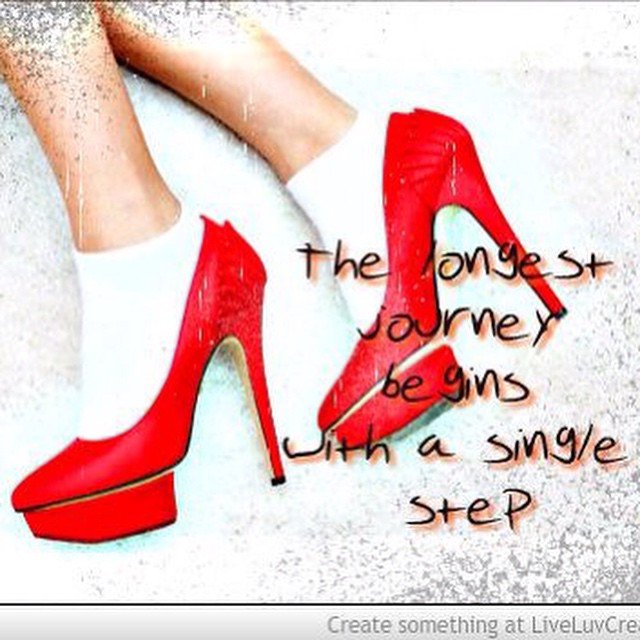
The longest journey begins with a single step

“The longest journey begins with a single step ” – that is the inspiring quote I am using as the opening epigraph for my book of Bound Feet Blues.


It is apt for the topic of bound feet and in particular the pain of walking in bound feet – but also encompasses any endeavour we may try.

Step by step.

That is what got Cheryl Strayed through her thousand mile hike along the Pacific Crest Trail, as portrayed in her book and the movie of the same name, Wild. That is how my great-grandmother escaped an unhappy marriage in China, on her bound feet, to make a new Continue reading

Beautiful women are evil – so said the Ancient Greeks

Bound Feet Blues explores female beauty in the context of Ancient China and the practice of footbinding that was meant to make a woman more beautiful. My work on this project has led me to reflect on modern concepts of beauty in the modern West. Now, I have just  seen this article on the BBC website by historian Bethany Hughes looking at the beauty in the world of the Ancient Greeks – and it points to a rather different view of beauty from what we are used to.

The article says “In ancient Greece the rules of beauty were all important. Things were good for men who were buff and glossy. And for women, fuller-figured redheads were in favour – but they had to contend with an ominous undercurrent”

In Greek mythology, the first woman to be created was …” “the beautiful-evil thing”. She was evil because she was beautiful, and beautiful because she was evil. Being a good-looking man was fundamentally good news. Being a handsome woman, by definition, spelt trouble.”

This point of view contrasts with most notions of beauty which ellide goodness of character with good looks. In Ancient China, for example, an Exemplary Woman was one who was obedient and dutiful – and who was also beautiful, where her beauty was entirely defined by the tiny size of her feet. In modern times, heroines in movies and books tend to be beautiful, too, rather than plain or ugly unless their plainness is part of the plot device/ reason for the story.

However, this Greek notion of female beauty as evil does live on today in the modern trope of the evil seductress whose beauty is Continue reading