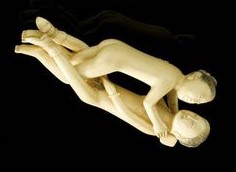
We went to the The Institute of Sexology | Wellcome Collection exhibition just before Xmas. It is a fascinating history of the study of human sexuality and includes a number of artefacts from China showing women with bound feet. I blogged a few days ago about an ivory carving showing a Chinese couple making love which is on show at the exhibiton.
Catch it if you can before Sept 2015. Here is the blurb and also the promotional video:
” ‘The Institute of Sexology’ tells the complex and often contradictory story of the study of sex through Continue reading
This tiny ivory couple shows a Chinese man and woman making love. You can see the man on top, with his bare feet. Under him is the woman with her legs wrapped around him. You can just about see her breasts and if you look very closely, you will see her tiny bound feet.
The original carving can be seen at the Institute of Sexology exhibition at the Wellcome Foundation, which is on till Sept 2015.
Looking Western seems to be an ideal of beauty for some Chinese women, according to an article in the Daily Mail. They are getting cosmetic surgery on their faces to remove their Chinese features – making their eyes bigger, sharpening their noses and reshaping their faces to seem longer. Is looking Chinese really so awful for these women that they feel they have to destroy their own faces to look more Western and therefore in their minds more beautiful?
Looking at the photos in the article, I am reminded of depictions of women in anime comics, which originated in Japan – with large saucer like eyes and heart shaped faces, mapping Western features onto Eastern female faces. The skin tones also seem to have been altered to look paler and pinker. There, too, in those comic books, Western features are idolized.

Bound Feet Blues explores why women in ancient China were prepared to do violence to themselves and their daughters in the context of footbinding, which mutilated a girl’s feet beyond repair. That brutal cultural practice died out about 70 years ago. But it looks like it has returned but in another form.
The underlying message of both bound feet and this Westernizing cosmetic surgery seems to me to be that Continue reading
In this video, a 90+ year old Chinese lady in Malaysia is interviewed, talking about her experience of having her feet bound.
The practice of footbinding did not take place in Malaysia but many women who had had their feet bound as childre migrated to Malaya (as Malaysia used to be called before independence from British rule) in later life.
The Guardian has a terrific gallery of photos showing a selection of totally bonkers high heels including this pair of killer stilettos…. – from an exhibition aptly entitled Killer Heels at the Brooklyn Museum, on now till 15 Feb 2015.

The gallery shows that high heels were also in fashion in ancient China – see this pair below. They emulated bound feet for the ruling Continue reading
Here’s a short video interview of me talking about the inspirations behind Bound Feet Blues and the challenges of bringing it to the stage.
It was filmed just after the Heritage Panel that I took part in, discussing the role of heritage in South East Asian Performance with Anna Nguyen of Trikhon Theatre and Elaine Foo of TrueHeart Theatre.
There’s also a short snippet of me performing a scene from the show for the audience at the Heritage Panel.
Enjoy!
I perform Bound Feet Blues without any costumes or props – or even any shoes. My aim is to invite the audience to experience the show in the way that we have all experienced stories being told to us when we were children – that is, by co-creating the characters, events and landscapes in our imaginations.
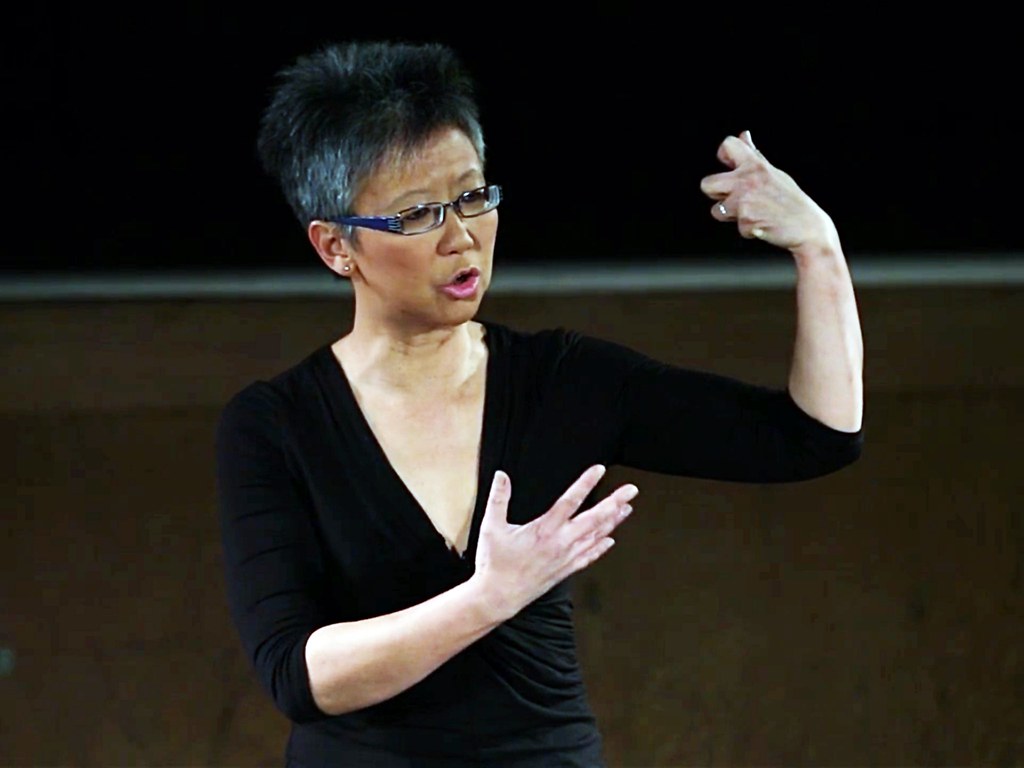
I use my left hand to map the process of footbinding – it starts off as a normal “foot” and is steadily contorted and “broken” into the twisted shape that you see in the photo below. For comparison, I’ve also found a photo of an actual bound foot – also below.
This performance photo was taken at the scratch night in March at Conway Hall.
The most prized foot was called “the golden lotus” – it was Continue reading
While women in Ancient China had to endure their feet being broken and bound in order to conform to the traditional Chinese cultural ideal of feminine beauty, some men endured castration in order to rise in the ranks of power.
This is a chilling photo of what castration meant for a man of that time
According to Green 9999 on Pinterest:
Eunuch-is a castrated man. In ancient China, castration was a traditional punishment or a means of gaining employment. During the Ming Dynasty there were 70,000 eunuchs, some by self-castration. Some of these individuals had Continue reading
Did you know that one of the earliest recorded versions of the Cinderella story was written down during the Tang Dynasty in China around 850 AD? It was recorded by Duan Chengshi but he says it is about a woman who lived a thousand years before.

The two most famous versions of the Cinderella story are the ones by the Brothers Grimm and Charles Perrault involving glass slippers, pumpkins and mice as well as a wicked stepmother and two ugly stepsisters – seared into our collective memories by the Disney animated movie. Both these versions were recorded around the 1700s and 1800s AD in Western Europe.
In the Tang Dynasty version, the heroine’s name is Ye Xian. The key elements are as in the Western version although the twists and turns of the story differ. The Chinese Cinderella is bullied by her wicked stepmother and two evil step-sisters and she goes to a ball in disguise, wearing a sumptuous Continue reading